
Sandro Cimino Nautical Upholstery takes care of every detail of your project:
- Free inspection and estimate
- Choice of materials
- Realization
- Installation and testing
- Assistance
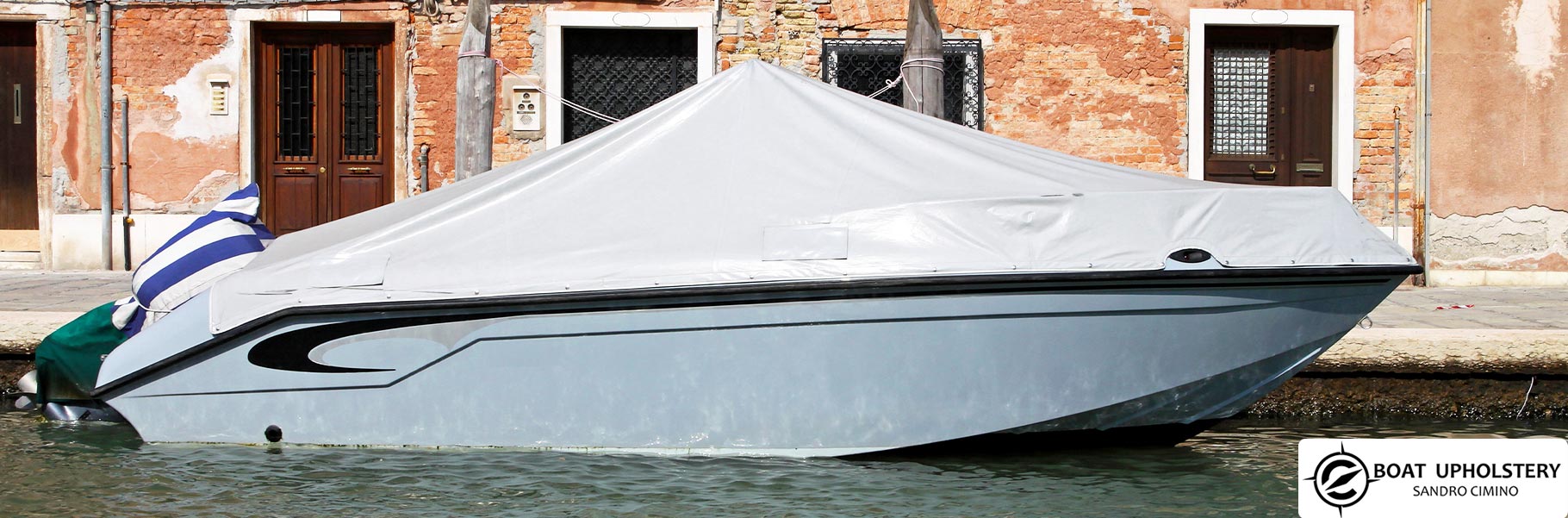
Marine covers are key elements in the protection and preservation of boats of all types, from small boats to large yachts, in fact they perform several crucial functions:
- Weather protection: They protect against sun, rain, wind, snow, hail and salt spray, preventing damage to paint, wooden parts, upholstery and electronic equipment.
- UV protection: The sun’s ultraviolet rays can cause fading, cracking and deterioration of materials. Quality marine covers provide an effective barrier against UV radiation.
- Protection from dirt, dust and animals: Keeps the boat clean and protected from dust, dirt, bird droppings and other external agents.
- Security: Covers can act as a deterrent to theft by making it more difficult to gain access to the boat.
The different types of marine covers:
- Full covers (“full covers”): They completely wrap around the boat, offering maximum protection. They are ideal for winter storage or extended periods of non-use.
- Partial covers: They cover only part of the boat, such as the cockpit, steering console, or seating. They are lighter and easier to install than full covers and are suitable for protection during the summer season or for short periods of non-use.
- Console and seat covers: They specifically protect the most delicate and expensive parts of the boat, such as the steering console, electronic instruments, and upholstery.
- Sprayhoods (Sprayhood): Protect the cockpit from water spray and wind, improving comfort while sailing, especially in adverse weather conditions.
- Engine Covers: Protect the outboard or inboard engine from weather and dust.
Materials for Nautical Covers:
The choice of materials is critical to ensure the durability and effectiveness of the cover. The best materials are:
- Acrylic: Very resistant to UV light, fading and mildew.
- PVC (polyvinyl chloride): Waterproof and durable, but less breathable than fabrics. It is often used for integral and inflatable boat covers.
- Coated fabrics: Fabrics with a PVC coating to increase waterproofing and strength.
Factors to Consider:
- Type of boat: The size, shape and type of boat.
- Climatic conditions: The climate of the sailing or storage area.
- Frequency of use: If the boat is used frequently, a partial cover or awning may be sufficient. For winter storage, a full cover is recommended.
- Budget: Prices vary depending on material, size and type of cover.
Maintenance Tips:
- Regular cleaning: Clean the cover with mild water and mild soap to remove dirt, saltiness and other residues.
- Complete drying: Make sure the cover is completely dry before storing it to avoid mold growth.
- Proper storage: Store the cover in a dry and ventilated place when not in use.
- Periodic inspection: Periodically check the condition of the cover and repair any damage or tears.